Slovenia Key Information
Documents & Legal Basics
Part of the Schengen Area (90 days within 180 days)
Residence & immigration handled by the Ministry of the Interior
Official entry & residence portal:
Types of stay:
Schengen visa / visa-free stay
Temporary residence permit (work, study, family reunification)
Permanent residence permit (after long-term legal stay)
Registration requirement:
EU/EEA citizens must register residence if staying longer than 90 days
Non-EU nationals must apply for a residence permit before the visa-free period ends
Residence & immigration info:
Work & Residence Permits
Combined residence + work permit (Enotno dovoljenje) for non-EU nationals
EU/EEA/Swiss citizens do not need a work permit
Official employment & permit info: Employment Service of Slovenia (ESS)
Banking, Money & Taxes
Banks: Nova Ljubljanska Banka & OTP & SKB & UniCredit Banka & Intesa Sanpaolo
Usually needed: Passport/ID, Slovenian tax number (davčna številka), proof of address
SIM Card & Internet
Operators: Telekom Slovenije & A1 Slovenija & Telemach & T-2
ID required for SIM registration
Prepaid and contract plans available
Housing Basics
Websites: Nepremicnine & Bolha
Facebook groups:
Housing in Ljubljana
Slovenia Rentals
Beware of scams:
Paying before viewing
No written lease
Unrealistically low rent offers
Public Transport
City buses (Ljubljana):
LPP Ljubljana: https://www.lpp.si
Regional buses:
Arriva Slovenia: https://www.arriva.si
National trains:
Slovenske železnice: https://www.slo-zeleznice.si
Tickets via machines, kiosks, or apps
Monthly passes available
Healthcare Basics
Public healthcare system managed by ZZZS
Mandatory health insurance is required
Employers usually register employees
EU citizens may use Ean HIC temporarily
Emergency: 112
Work Basics
Job sites: MojeDelo & Deloglasnik & EURES
Statutory minimum wage applies
Language & Support
Language: Slovene
Integration & employment support:
Employment Service of Slovenia: https://www.ess.gov.si
Language learning resources:
Government integration info:
Slovenia is a Central European country located between the Alps, the Mediterranean, and the Balkans, giving it a diverse landscape and cultural mix. For centuries, it was part of the Habsburg Empire and later Yugoslavia before declaring independence in 1991. Slovenia quickly developed into a stable democratic republic and joined the European Union and NATO in 2004.
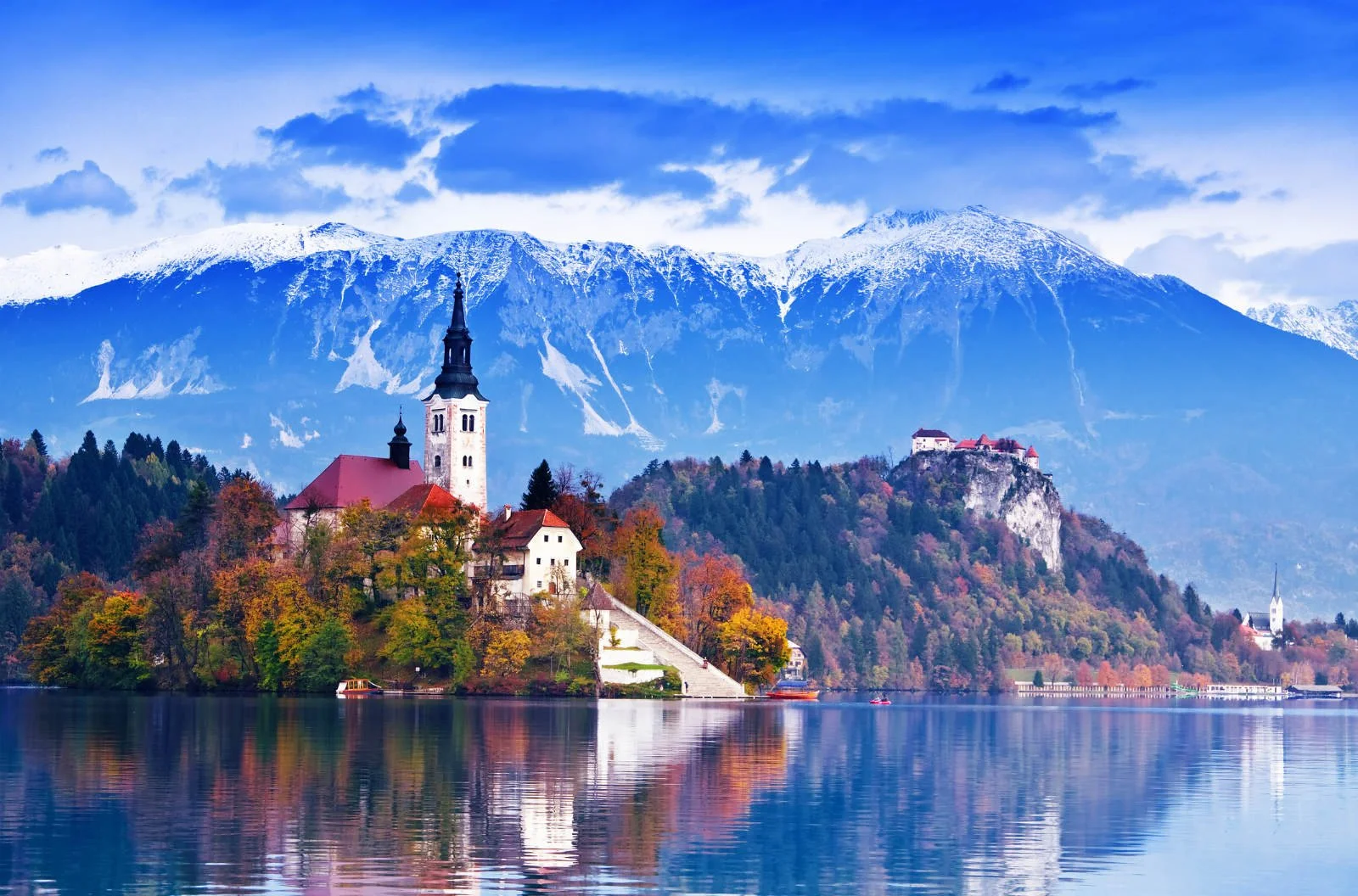
Slovenian culture reflects influences from Central Europe, the Balkans, and the Mediterranean. The country is known for its mountains, lakes, forests, and small coastline along the Adriatic Sea. Folk traditions, music, and local festivals remain important, alongside a strong appreciation for nature and outdoor life. Historic towns, castles, and alpine architecture shape its visual identity.
Family life, hospitality, and environmental awareness are central to Slovenian society. Today, Slovenia blends preserved traditions with a modern European outlook and is often recognized for its quality of life and sustainable development.