Slovakia Key Information
Documents & Legal Basics
Part of the Schengen Area (90 days within 180 days)
Residence permits handled by the Foreign Police Department (Ministry of Interior)
Types of stay:
Schengen visa / visa-free stay
Temporary residence permit
Permanent residence permit
Tolerated residence permit
Temporary residence is purpose-based (work, study, business, family reunification)
Residence & immigration info: https://www.minv.sk/?foreigners-residence
Banking, Money & Taxes
Banks: Tarta Banka & Slovenská sporiteľňa & VÚB Banka & ČSOB
Usually needed: Passport/ID, proof of address, residence permit
SIM Card & Internet
Operators: Orange Slovensko & Telekom Slovakia & O2 Slovakia & 4ka
ID required
Prepaid plans are very common
Housing Basics
Websites: Nehnutelnosti
Facebook groups: Housing in Bratislava, Expats Slovakia
Beware of scams:
Large upfront payments
No written contract
Extremely low rent offers
Public Transport
Bratislava public transport (DPB): DPB
Regional & city transport app: IDS BK
Trains (national railway): ZSSK
Tickets via machines, kiosks, or apps
Monthly passes available
Healthcare Basics
Public system with mandatory health insurance
Employers usually register employees
Private insurance ris equired if not eligible
Emergency: 112
Ambulance: 155
Work Basics
Official employment info: Ministry of Labour
Language & Support
Language: Slovak
Free legal, job & language support: IOM Migration Information Centre (MIC)
Slovak language learning:
Slovakia is a Central European country with a history shaped by kingdoms, empires, and modern independence. For centuries, its territory was part of the Kingdom of Hungary and later the Austro-Hungarian Empire. After World War I, Slovakia became part of Czechoslovakia, experienced Nazi influence during World War II, and later decades of communist rule under Soviet influence. In 1993, Czechoslovakia peacefully split into two states, and Slovakia became an independent republic. It joined the European Union and NATO in 2004.
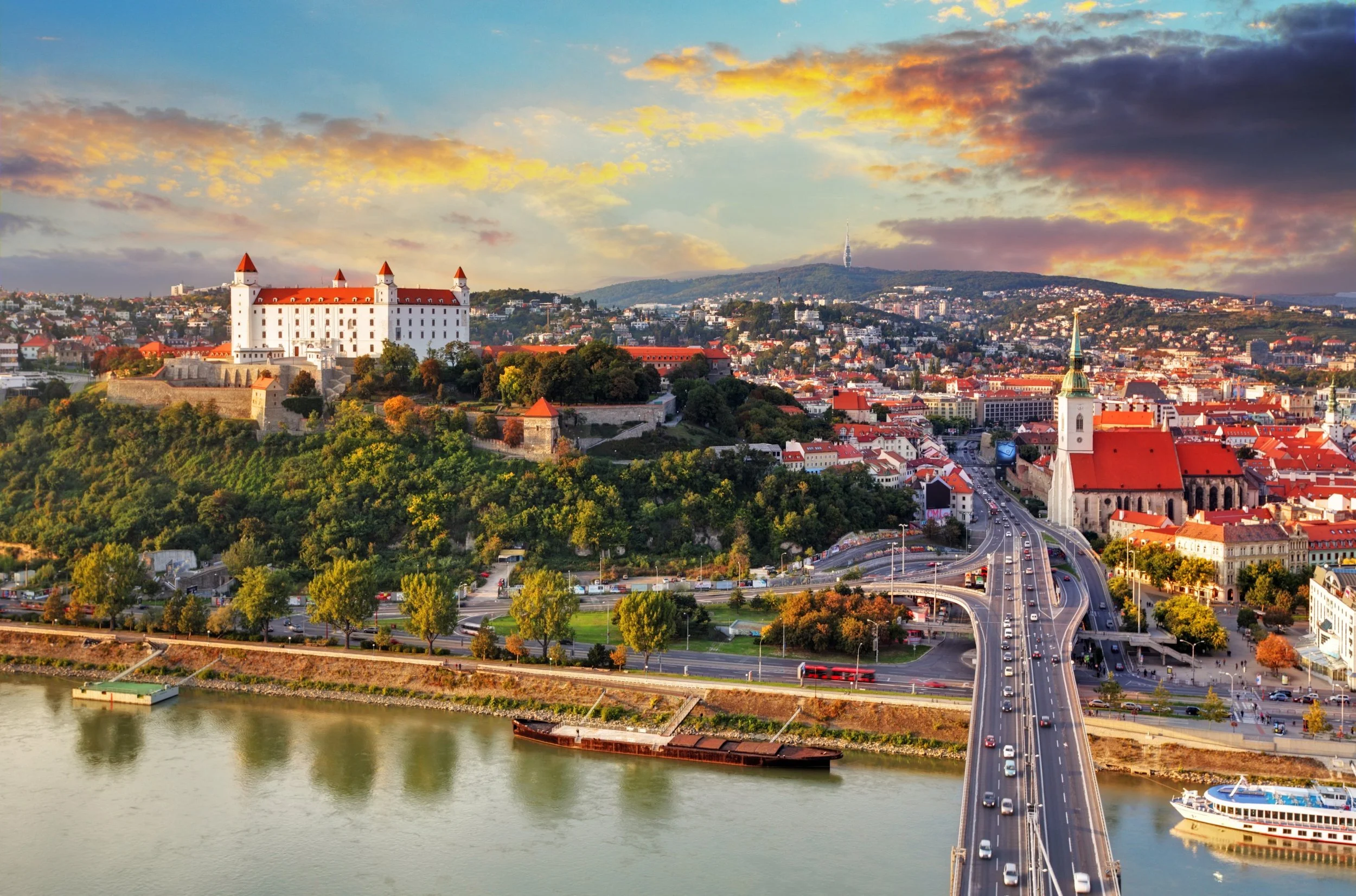
Slovak culture is closely tied to its mountainous landscape, especially the Tatra Mountains, which are an important symbol of national identity. Folk traditions in music, dance, embroidery, and crafts remain visible, particularly in rural regions. Medieval castles, wooden churches, and well-preserved historic town squares highlight the country’s architectural heritage. Cities like Bratislava and Košice show a blend of historic charm and modern development.
Family life, seasonal festivals, and strong regional customs play an important role in society. Slovak cuisine, hospitality, and respect for nature are part of everyday life. Today, Slovakia balances its historical traditions with a modern European outlook and a growing cultural presence.