Romania Key Information

Documents and Legal Basics
Romania issues permits for various purposes:
Single Permit (combined residence + work permit)
EU Blue Card (for highly qualified workers)
Long-term residence permit (after continuous stay)
Official source with detailed info: General Inspectorate for Immigration (IGI)
Online service portal to submit applications and track status
Registration Requirement
Non-EU citizens must obtain a long-stay visa (D-type) from a Romanian embassy/consulate before arriving if they plan to stay longer than 90 days.
After arrival, they must apply for a temporary residence permit at the local IGI office at least 30 days before the visa/permitted stay expires.
EU/EEA/Swiss citizens only need to register with local authorities for stays over 3 months.
Work Permits & Legal Work
To work legally, most non-EU migrants need:
A work authorisation obtained by the future employer from IGI (General Inspectorate for Immigration).
A long-stay visa for employment (D/AM).
After entering Romania, a temporary residence permit for work.
Some categories are exempt from work authorisation depending on bilateral agreements.
The government sets an annual quota for work authorisations (~100,000 in the most recent years). Official EU work info page
Banking and Money
Main popular banks:
Banca Transilvania – a large local bank with online/mobile services.
ING Bank Romania—strong digital banking, often expat-friendly.
Banca Comercială Română (BCR)—one of Romania’s largest universal banks.
Raiffeisen Bank Romania – universal bank with many branches.
Online/Mobile/Neo-Banks:
Revolut works in Romania (you can open a Revolut account and use it with an RO IBAN if available).
Libra Internet Bank – Romanian bank with online services.
Wise, N26, and other EU online bank services can also be used.
Common Requirements to Open a Bank Account:
Passport or ID
Romanian residence permit or visa
Proof of address in Romania
Some banks request a tax number (CNP) if the applicant is a resident
SIM Cards and Internet
Main Mobile Operators: Orange Romania & Vodafone Romania & Digi Mobil & Telekom Romania
Prepaid vs Contract
Prepaid: No long-term commitment, buy credit and data as needed (common for new arrivals).
Contract: Longer subscriptions, often cheaper per month, may require residence documentation depending on the operator.
Some providers might ask for a passport/ID when registering certain types of plans, but prepaid SIM cards are often sold without strict ID requirements.
Housing Basics
Useful websites and platforms (mostly in Romanian & English): ImoBiliare & Storia
Facebook housing groups for specific cities (e.g., “Apartments for Rent Bucharest,” “Cluj Rentals”)
Tips:
Make sure to find “Apartamente De Închiriat” which means “Apartments for Rent”.
It is also better to use the name of the cities in Romanian when looking for apartments, for example, not Bucharest, but București.
Always view apartments before payment.
Sign formal lease agreements.
Check that the landlord is the legal owner before the transfer of funds.
Small room or small 1-bedroom outside city centre: ~€250–€400/month
1-bedroom in city centre: ~€400–€600/month
Common Scams to Avoid
Demands for large upfront cash deposits without a contract
“Pre-rent” without viewing the property
Requests to pay before seeing the legitimate lease
Public Transport
In cities (example Bucharest), you can use Metro (subway) & Buses & Trams & Trolleybuses
Bucharest example (ticket costs can vary):
Single metro/subway trip: ~5 RON (~€1)
Monthly public transport pass: ~130–140 RON (~€26–€28)
Tickets and passes are purchased at station kiosks or machines, and contactless card payments are available.
Healthcare
Public and Private Systems:
Romania has a public healthcare system funded by the National Health Insurance.
Private clinics are common and usually faster with English-speaking staff.
Insurance Requirement
Foreigners need health insurance to apply for residence permits.
EU citizens with a valid EHIC can access public health services.
Emergency Number
112 -emergency number across Romania.
Work Basics
Useful general platforms where jobs in Romania are listed (some are in English/Romanian): EURES – European Job Mobility Portal & BestJobs Romania & eJobs Romania & Indeed Romania & LinkedIn Romania
Minimum Wage & Worker Rights
Romania has a legal minimum wage set annually (often around €700–€800/month gross — varies yearly) — check latest on government or ANOFM pages.
Workers are protected by the Romanian Labour Code.
Language and Support
Romanian is the official language.
Useful organisations that provide support for migrants (information, legal help, language classes, social assistance):
Jesuit Refugee Service (JRS) Romania – social and legal support
Caritas Romania – social services
Romanian Red Cross – humanitarian assistance
Official Authority Links
Romania is a Southeastern European country with a history shaped by ancient civilizations, medieval principalities, and modern political change. Its territory was once part of the Roman Empire, which influenced the Romanian language and national identity. In the Middle Ages, regions such as Wallachia, Moldavia, and Transylvania developed under Ottoman, Hungarian, and Austrian influences before uniting in the 19th century to form the modern Romanian state. Romania experienced monarchy, followed by decades of communist rule under Soviet influence, and transitioned to democracy after the 1989 revolution. It joined the European Union in 2007.
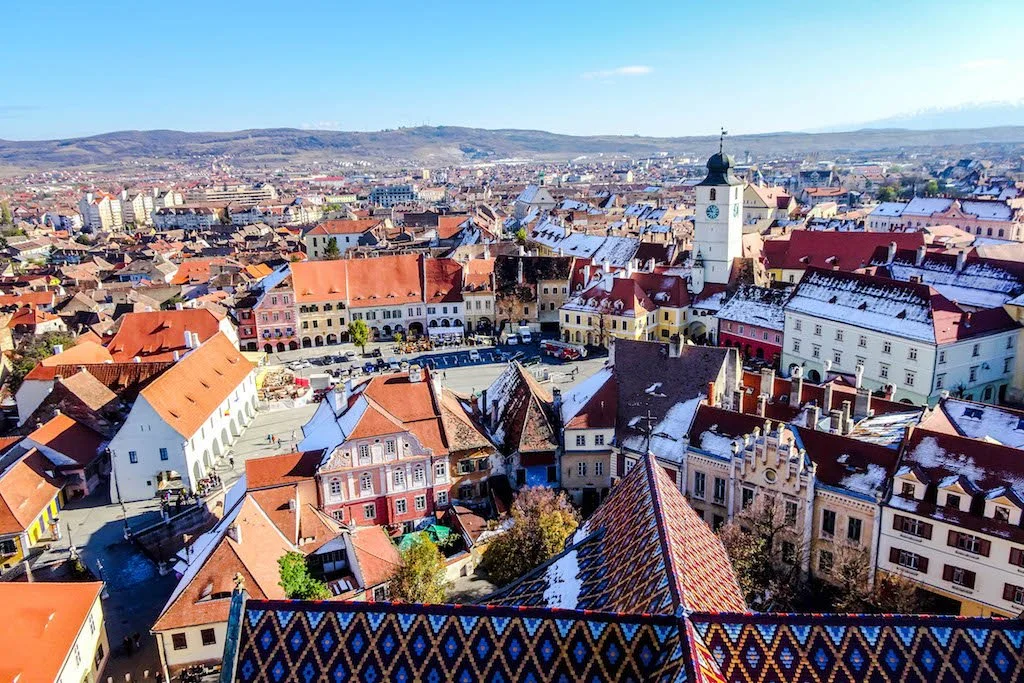
Romanian culture reflects a blend of Latin roots and Eastern European traditions. Folk music, traditional dance, handmade crafts, and seasonal festivals remain important parts of national life, especially in rural communities. Historic castles, painted monasteries, and old town centers highlight its architectural heritage. Cities like Bucharest, Cluj-Napoca, and Sibiu show a mix of historic and modern influences.
Nature plays a strong role in Romanian identity, with the Carpathian Mountains, vast forests, and the Danube Delta providing diverse landscapes. Romanian cuisine, hospitality, and strong family ties are central to everyday life. Today, Romania balances its rich historical traditions with a growing modern European presence and cultural revival.