Poland Key Information
Documents & Legal Basics
Part of the Schengen Area (90 days within 180 days for short stay)
Immigration handled by the Office for Foreigners (Urząd do Spraw Cudzoziemców)
Official immigration portal: https://www.gov.pl/web/udsc-en
Types of stay:
Schengen visa / visa-free stay
Temporary residence permit (work, study, business, family)
EU Blue Card (highly qualified workers)
Permanent residence / Long-term EU resident status
After arrival, you must register your address (zameldowanie) at the local municipality (Urząd Miasta / Gmina)
Residence procedures and forms: https://www.gov.pl/web/udsc-en/residence-permits
Work & Residence Permits
Combined work and residence permit for employees:
https://www.gov.pl/web/udsc-en/temporary-residence-and-work-permitEU Blue Card:
https://www.gov.pl/web/udsc-en/eu-blue-cardLabour law and work legality: Ministry of Labour https://www.gov.pl/web/family
Banking, Money & Taxes
PKO Bank Polski—https://www.pkobp.pl/
mBank—https://www.mbank.pl/
Santander Bank Polska — https://www.santander.pl/
ING Bank Śląski—https://www.ing.pl/
Millennium Bank—https://www.bankmillennium.pl/
Usually required: passport, residence card, PESEL number, proof of address
Polish IBAN (PL) required for salaries and rent payments
Online banks widely used: Revolut — https://www.revolut.com/ | Wise — https://wise.com/ | N26 — https://n26.com/
SIM Card & Internet
Orange Polska—https://www.orange.pl/
Play—https://www.play.pl/
T-Mobile — https://www.t-mobile.pl/
Plus—https://www.plus.pl/
ID/passport required to register SIM card (legal requirement)
Prepaid SIM cards sold in supermarkets, kiosks (Żabka, Lidl, etc.)
Housing Basics
Main websites:
Facebook groups: “Warsaw apartments”, “Krakow housing”, “Poland expats housing”
Standard: 1 month rent + 1 month deposit
Always sign written lease (umowa najmu) before payment
Public Transport
Each city has its own system (Warsaw, Krakow, Wroclaw, Gdansk)
Tickets must be bought before boarding (machines, kiosks, apps)
National trains: PKP Intercity — https://www.intercity.pl/
Regional trains: Polregio — https://polregio.pl/
Journey planner: https://jakdojade.pl/
Healthcare Basics
Public health insurance via NFZ (National Health Fund)
https://www.nfz.gov.pl/Employees registered automatically by employer
Private insurance often used for faster access (LuxMed, Medicover)
Emergency number: 112
Work Basics
Language & Support
Official language: Polish
Free Polish language courses for migrants:
https://www.migrant.info.pl/Integration & migrant support:
https://www.fundacjaocalenie.org/Citizen services & procedures: https://www.gov.pl/
Poland is a Central European country with a long history marked by powerful kingdoms, partitions, and resilience. It was once one of the largest states in Europe as part of the Polish-Lithuanian Commonwealth before being divided between neighboring empires in the late 18th century. Poland regained independence in 1918, later suffered occupation during World War II, and spent decades under communist rule influenced by the Soviet Union. In 1989, democratic reforms began, leading to the establishment of a modern republic. Poland joined the European Union in 2004 and has since become an important political and economic actor in the region.
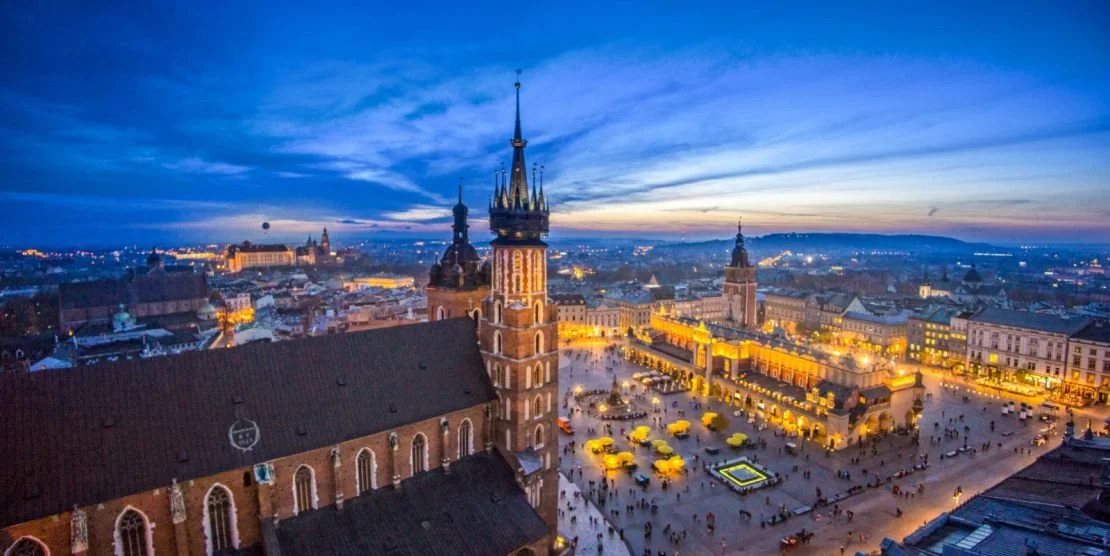
Polish culture is strongly connected to Catholic traditions, literature, music, and national remembrance. Historic cities such as Kraków, Gdańsk, and Warsaw reflect different layers of medieval, renaissance, and modern history. Family life, hospitality, and seasonal festivals remain central to society. Traditional cuisine, folk costumes, and regional customs are still widely celebrated, especially in rural areas.
Poland is also known for its intellectual and scientific contributions, with figures such as Nicolaus Copernicus and Marie Curie shaping global knowledge. Natural landscapes, including forests, mountains, and the Baltic coastline, are an important part of national identity. Today, Poland combines deep historical awareness with a dynamic, modern European presence and a strong sense of cultural continuity.