Luxembourg Key Information
Documents & Legal Basics
Part of the Schengen Area (90 days within 180 days)
Residence & immigration handled by the Directorate of Immigration (Ministry of Foreign and European Affairs)
Official immigration portal: https://guichet.public.lu/en/citoyens/immigration.html
Types of stay:
Schengen visa / visa-free stay
Temporary residence permit (work, study, family reunification, research)
EU Blue Card (highly qualified workers)
Permanent residence (after long-term legal stay)
Registration required after arrival:
Register address at the local municipality (commune) within 3 days
Residence & immigration info:
Work & Residence Permits
Residence permit for salaried workers (combined work + residence): https://guichet.public.lu/en/citoyens/immigration/travail.html
EU Blue Card: https://guichet.public.lu/en/citoyens/immigration/travail/carte-bleue.html
Official labour & permit info: Ministry of Labour
Healthcare Basics
Mandatory health insurance via CNS (National Health Fund)
Employees registered automatically by employer
EU citizens may use EHIC temporarily
Emergency: 112
Work Basics
Statutory minimum wage applies (among the highest in the EU)
Language & Support
Languages:
Luxembourgish
French
German
Integration & migrant support:
ASTI (migrant support NGO): https://www.asti.lu
Official integration & citizen services:
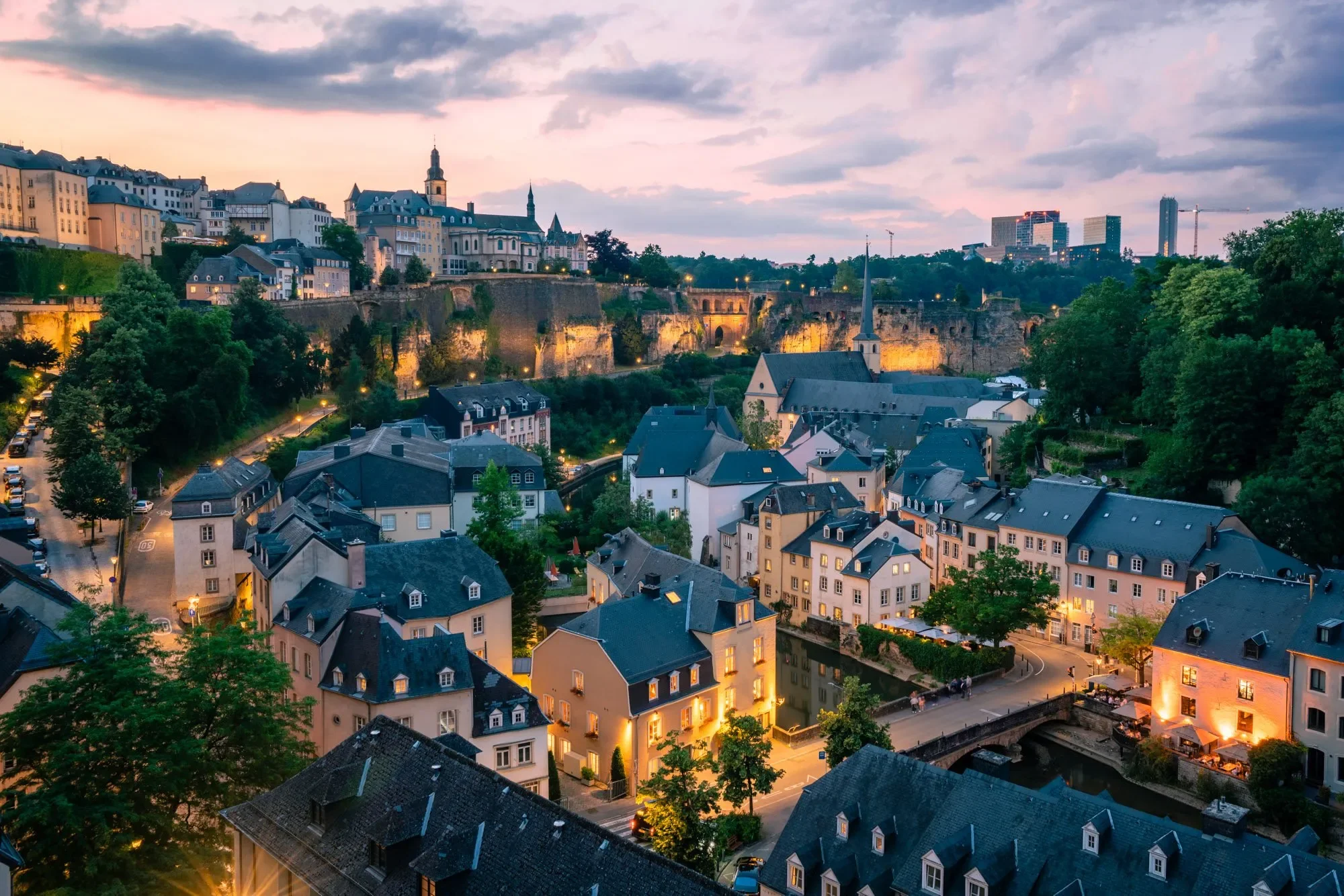
Luxembourg is a small Western European country bordered by Belgium, France, and Germany, whose history has been shaped by its strategic location at the crossroads of major European powers. For centuries, Luxembourg was contested and ruled by neighboring states due to its military and economic importance. It eventually became an independent Grand Duchy in the 19th century, developing a strong sense of sovereignty despite its small size. In the modern era, Luxembourg has played a central role in European integration as one of the founding members of the European Union and as the host of several key EU institutions, reinforcing its position as a hub of European cooperation and diplomacy.
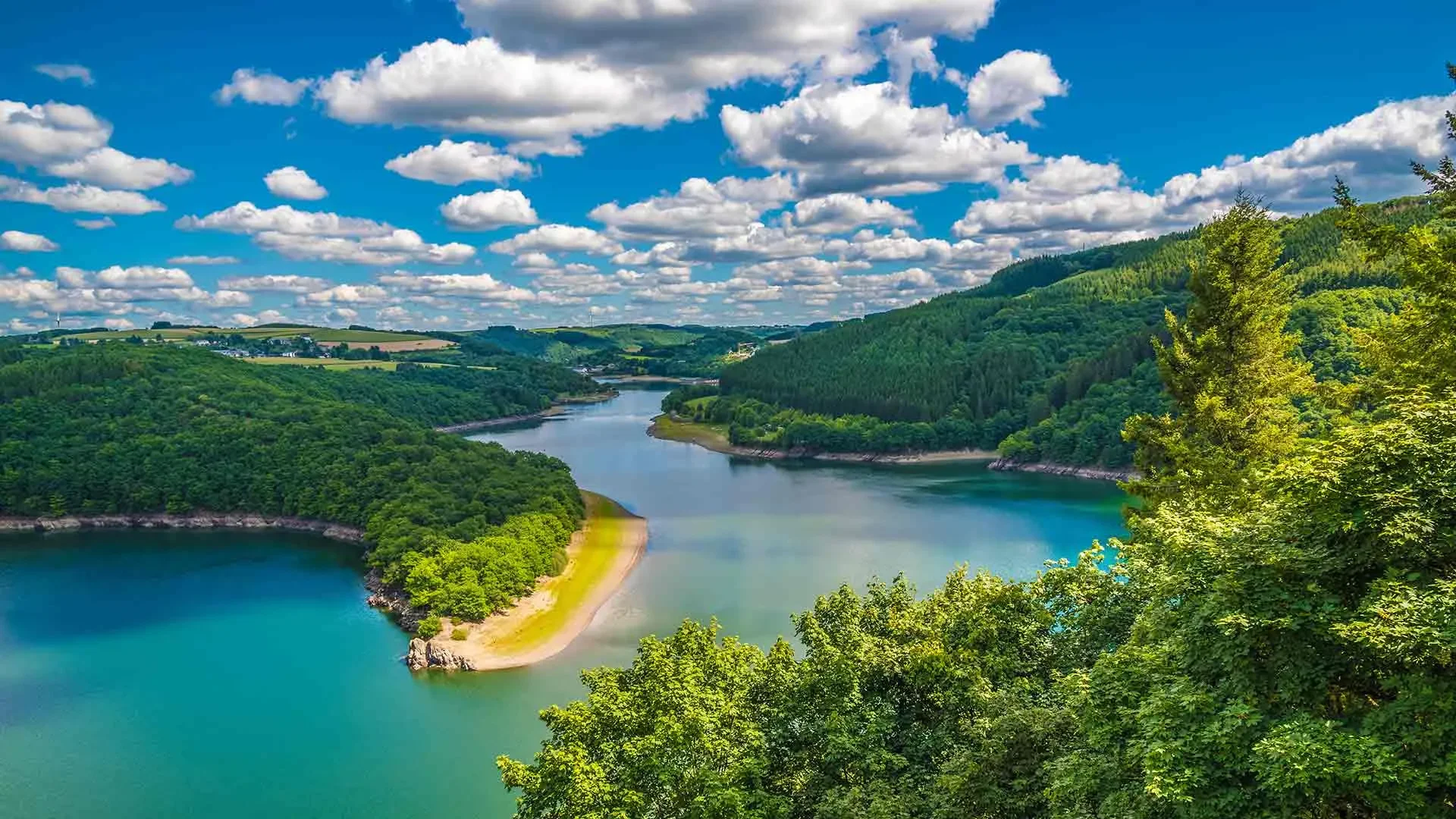
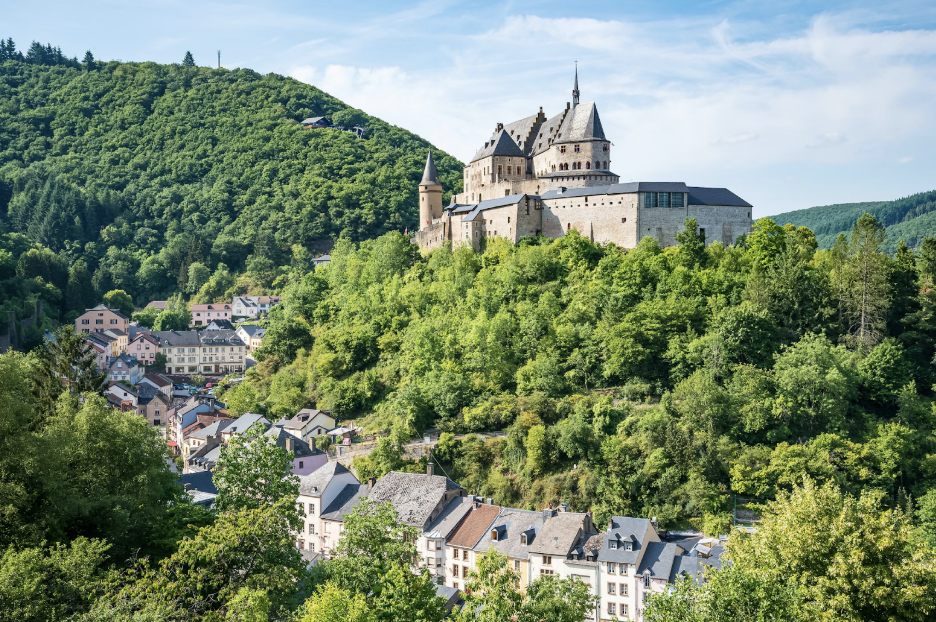
Luxembourg’s culture reflects its highly multilingual and international society, where Luxembourgish, French, and German are all used in daily life, education, and government. This linguistic diversity contributes to a flexible and outward-looking national identity. The country combines historic elements such as medieval fortresses, old towns, and castles with modern financial districts and EU administrative centers. Its landscape features green valleys, rivers, and forests, providing a strong contrast between natural beauty and urban development.
Today, Luxembourg is known for its high standard of living, political stability, and strong economy, particularly in finance and European governance. A large international population lives alongside long-standing local traditions, creating a cosmopolitan yet rooted society. By blending historic heritage with modern institutions and global connections, Luxembourg represents a unique model of a small but influential European state.
Banking, Money & Taxes
Banks: BGL BNP Paribas & Caisse d’Épargne de l’État (BCEE / Spuerkeess) & ING Luxembourg & Raiffeisen
Usually needed: Passport/ID, proof of address, residence permit
Local LU IBAN often required for salary payments
SIM Card & Internet
Operators: POST Luxembourg & Orange Luxembourg & Tango
ID required for SIM registration
Prepaid and contract plans available
Housing Basics
Facebook groups:
Housing in Luxembourg
Luxembourg Expats Apartments
Beware of scams:
Paying before viewing
No written lease
Unrealistically low rent offers
Public Transport
Public transport is free nationwide (buses, trams, trains)
National railways:
CFL: https://www.cfl.lu
Luxembourg City transport (tram & buses):
No tickets required for standard public transport